 Orlando Berry Basket
Grow
Blueberry pH 4.0–5.5, Hull's fall plant window
Growing Strawberries in the Florida Home Garden plants Hull's crop from late September to early November. The Blueberry Gardener's Guide wants soil pH 4.0 to 5.5 and plants mid-December to mid-February. Two calendars. Two beds.
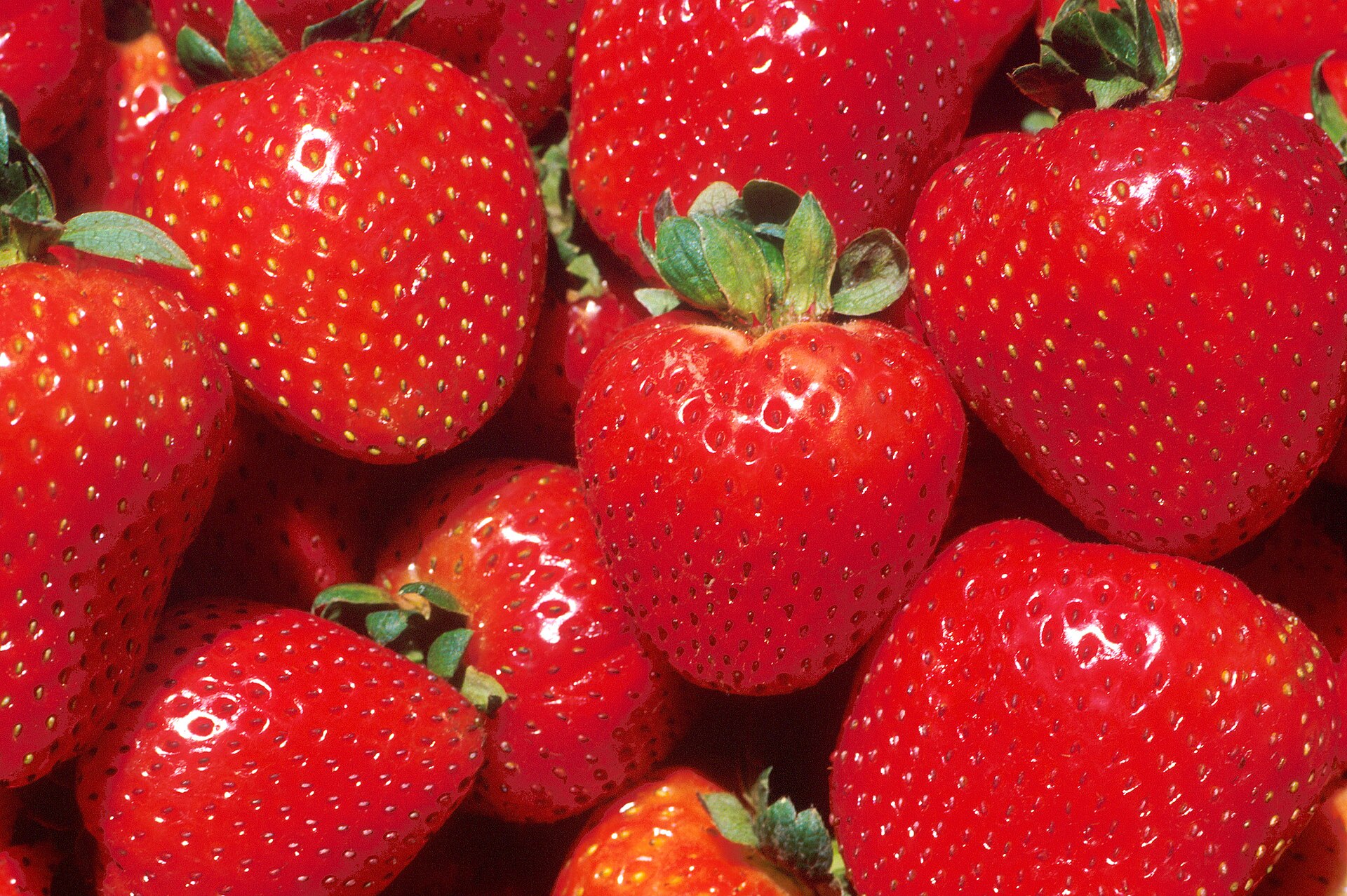
Temperatures between 50°F and 80°F and day lengths 14 hours or less are required for the development of flowers and fruit on most strawberry varieties.
Jump: fall window · blueberry pH · pine bark · blueberry plant · cultivars
| Region | Strawberry plant dates (commercial guide) |
|---|---|
| North Florida | September 20–October 15 |
| Central Florida | September 25–October 25 |
| South Florida | October 1–November 1 |
| Home garden | Late September to early November |
Why winter, and why annual
That quote is the whole reason the Florida calendar is upside down. North of here those conditions show up briefly in late summer and again in spring. On the Florida peninsula they hold through much of fall, winter, and spring. So single-crown plants go in from late September to early November, flowering and fruit start in November, and the crop runs into April or May. It does not run steadily. The home-garden strawberry guide says fruit comes in two or three cycles and can be interrupted by freezing weather.
The plants come out at the end of it. Best quality fruit comes from relatively young plants carrying no more than four or five branch crowns, so gardeners pull them after fruiting and set new ones the following fall. The home-garden strawberry guide suggests three varieties for the home garden: Camarosa, Florida Brilliance, and Sweet Sensation Florida127. Camarosa has been the most productive in North Florida. Florida Brilliance and Florida127 produce more early in the season and have been the most productive commercially in Central Florida. Expect 1 to 2 pints per plant across the season.
Bed, container, or both
The home-garden strawberry guide recommends for home gardens the same thing commercial growers do: double rows on soil mounded into raised beds. Raised beds drain, which means roots keep enough oxygen through heavy rain, and they make picking easier on your back. Site for at least 8 hours of direct sun. If you cannot get that, take a spot that is sunny in the morning and early afternoon. Soil should be well drained and slightly acidic, pH 5.5 to 6.5.
Containers are explicitly allowed. The home-garden strawberry guide lists planter boxes, strawberry pots, and barrels alongside beds. That is the version of this crop that fits a patio and moves indoors on a bad night.
How to set a bed
- Work 2 pounds of 10-5-10 garden fertilizer with micronutrients, including boron, into every 10 feet of row before planting. About half the nitrogen should be slow release, meaning a sulfur or resin coated material.
- Rake a quarter of that fertilizer evenly across the top of the bed. Band the rest about an inch deep down the middle.
- Lay drip tape emitter side up in a trench 2 to 3 inches deep down the center, then cover it with an inch or two of soil.
- Cover the bed with black polyethylene sheeting, 1 to 1.5 mils thick. The home-garden strawberry guide says it controls weeds and keeps fruit cleaner than bare soil. Clear plastic is not recommended because it does not control weeds.
- Set transplants through slits in the plastic. Do not bury the crown and do not leave roots exposed.
Bare-root transplants with leaves on them yield more early fruit, but they need frequent sprinkler irrigation from roughly 10 a.m. To 5 p.m. For the first one to two weeks. Plug transplants keep their root ball intact and need very little. After establishment, drip or soaker at low pressure, around 10 psi for half an hour to an hour, moistens a bed. Water once a week early in the season, two or three times later when plants are bigger and the weather is warmer.
Freeze nights
Strawberry flowers and fruit are damaged below 32°F. Leaves and crowns that have acclimated to cool fall and winter weather usually take no permanent damage unless the air hits the low 20s. The home-garden strawberry guide's practical answer for a gardener is a cover: sheets, blankets, or frost cloth, put on during the afternoon before an expected freeze and anchored down on all sides so wind cannot lift it. Get this. A small tunnel of PVC hoops under clear plastic works too, with sides you raise and lower as the air warms.
Pests
The home-garden strawberry guide says the first key is starting with healthy transplants, free of root diseases, spider mites, and nematodes, from a reputable nursery. A gardener who starts with infested plants is fighting uphill all season.
Spider mites are the more persistent problem in Florida, more so than insects. Start checking in early December for leaves with small patches of yellow, pin prick sized stipples showing through the upper surface, and use a hand lens to see the mites on the underside. If 5 percent or more of the leaflets you check have them, treat with a neem product, insecticidal soap, or mineral oil, twice, spaced 5 to 7 days apart. Early in the season, October and November, caterpillars feed on crowns, leaves, and young flowers, and Bacillus thuringiensis or a neem extract with azadirachtin usually handles the small ones. Hand-picking works in a small planting. The home-garden strawberry guide warns off bifenthrin where possible: pyrethroids damage beneficial insects and mites, and can make thrips worse, and chilli thrips are already resistant to it. Later in the season aphids and flower thrips work developing fruit, and the beneficials in a home garden, including lacewings, ladybird beetles, and minute pirate bugs, often handle it if you wait. Powdery mildew comes off with several sulfur applications, applied under 80°F so the foliage does not burn.
Two rotation rules. Do not plant strawberries in the same spot year after year, because parasitic nematodes and soil-borne pathogens build up; move to ground that has not grown strawberries for two or three years. And do not follow tomatoes, potatoes, or eggplant, which share Verticillium wilt. Birds, mainly robins and cedar waxwings, are excluded from a small planting with bird netting.
When to pick
A strawberry is ready when three quarters of its surface is red. It starts to deteriorate soon after it goes fully red, so pick every two to four days rather than waiting for a big harvest. Hold the fruit between thumb and forefingers and snap it off the pedicel by twisting your forearm and wrist. Ripe berries bruise easily. Freeze what you are not eating, or refrigerate in a moisture-proof container so they do not dry out. A huller takes the calyx out without taking half the berry with it. Get this.
The blueberry half: pH 4.0 to 5.5
Different plant, different rules. Blueberry Gardener's Guide requires soil pH 4.0 to 5.5. At higher values, tissue levels of iron and zinc become deficient. Deficiency shows on new growth. Plants lose vigor. Strawberries, on the same page of this site, want 5.5 to 6.5. The overlap at 5.5 is a line, not a shared bed. Do not lime a blueberry to suit Hull. Do not acidify a strawberry bed to suit a highbush.
| Number | What the papers say |
|---|---|
| pH 4.0–5.5 | Blueberry range. MG359. |
| pH 5.5–6.5 | Strawberry range. Home-garden guide. |
| Above 5.5 on blueberry | Iron and zinc deficiency. Loss of vigor. |
| Under 3% organic matter | Southern highbush not recommended without amendment. |
| 18 inches of drain | Minimum profile. Saturated soil invites Phytophthora root rot. |
Pine bark, peat, sulfur
Florida soils are usually short on organic matter. Per the Blueberry Gardener's Guide: if mulched, rabbiteye will usually grow on 1% organic matter and does better at 2%–3%. Southern highbush is not recommended under 3% without amendment and mulch. Milled pine bark is the usual fix, mixed into the native soil and laid 3 inches deep, about 2 feet out from the plant, or as a 4-foot strip down the row. Another option is a 6-inch pine-bark layer on top of the soil, with the plant growing in the bark. Add bark every 2 to 3 years as it decomposes. Peat moss can go in the hole at planting, a quarter to a half cubic foot of acid sphagnum peat.
Soil that tests too high is acidified with granulated sulfur mixed in several months before planting. Ammonium sulfate and fertilizers sold for azaleas and camellias are acid-forming and lower pH gradually. A soil test comes first. County Extension runs that test. Most water from deep wells has a pH over 7.0 and can raise sandy soil pH fast. Test annually if you irrigate from a well.
- Test the soil. Do not guess the pH.
- If the reading is above 5.5, mix granulated sulfur into the bed several months before the midwinter plant date. The Blueberry Gardener's Guide gives that sequence. It does not give an Orange County rate. Follow the test and the label.
- Incorporate milled pine bark. Set the plant at the same height it sat in the nursery. Flatten a raised bed near the plant so water does not run off.
- Mulch 3 inches of pine bark, 2 feet out. Keep weeds out of the first 2 feet. Blueberries are shallow-rooted and lose that fight.
- Do not put fertilizer in the planting hole. After the soil settles, The Blueberry Gardener's Guide starts un-mulched plants at 1 ounce of 12-4-8 with 2% magnesium, ammoniacal or urea nitrogen, chlorine below 2%. Repeat in April, June, August, and October. Over-fertilization kills more plants than under-fertilization.
Hypothesis: if an Orange County sand tests 6.0 or above, a pine-bark container is the practical out for one southern highbush. The Blueberry Gardener's Guide allows containers and prefers southern highbush for a pot because rabbiteye can reach 12 to 15 feet. High-acid commercial mixes are listed as suitable. The paper does not publish an Orlando mix recipe. A pot you can move on a freeze night is also the cover. Do not share the strawberry bed.
When to plant blueberries
Per the Blueberry Gardener's Guide: the best time to plant blueberries in Florida is mid-December to mid-February. Bare-root or container-grown plants both work. Use plants about 1.5 to 2 feet tall with well-developed roots that are not pot-bound. Keep bare-root roots moist, not soaked. Break up pot-bound root balls slightly. Spread bare-root roots in the hole. Full sun, at least 4 to 5 hours, away from hardwood roots, at least 20 feet from a building foundation. Pines are the listed exception. Allow 4 by 4 feet for southern highbush, 7 by 7 for rabbiteye. Hedgerow spacing is 3 feet for highbush, 5 feet for rabbiteye.
Prune at planting. Leave the tallest, strongest cane. Take weak twiggy growth at the base. If the top is large compared with the roots, take about a third of the top. During the first growing season, rub off all flowers before fruit set. That year is for roots, not fruit. This is especially important on southern highbush cultivars that flower heavily as young plants.
Southern highbush for the peninsula
Only low-chill cultivars work here. Most deciduous fruit wants more hours below 45°F than Florida delivers. Southern highbush is the type from Alachua and Putnam counties south to Hendry County. Rabbiteye wants winters as cold as or colder than Ocala's. Gardening Solutions says southern highbush is best suited to Central and South Central Florida. Rabbiteye is easier: more drought-tolerant, less Phytophthora, later bloom, more vigor. It is the wrong type for a warm peninsula winter.
| Cultivar | Where the blueberry guide puts it | Yard note |
|---|---|---|
| Emerald | Gainesville to Sebring | Vigorous. Early. Large fruit. Full bloom in Gainesville around February 15. Flowers and fruit need freeze cover in February and March. |
| Jewel | Gainesville to Sebring | Very early. High quality. Tart until fully ripe. Moderately susceptible to Phytophthora. Highly susceptible to rust leaf spot. |
| Star | North Florida and southeast Georgia | Has not performed well south of Ocala. Skip it here. |
| Windsor | North-central Florida; grown as far south as Hardee County | Very large berries. Deep picking scar is a packing problem, not a home-garden problem. |
| Farthing | North-central and central Florida | Dense canopy. Heavy flower set. Dormant pruning may be required so it does not over-fruit. |
| Rabbiteye group | North of Ocala | Easier culture. Requires a second rabbiteye for cross-pollination. Wrong winter for Orlando. |
Rabbiteye requires cross-pollination. Southern highbush benefits from it. Match type and bloom timing. Growing several also stretches the harvest. Per the Blueberry Gardener's Guide: with good pollination, 2 to 5 pounds per plant by year three or four. More recent UF cultivars still under patent are sold only to commercial growers. Home gardeners buy the named releases that nurseries are licensed to sell.
The 2023 USDA Plant Hardiness Zone Map is the ZIP lookup. Zone 10a averages 30–35°F extreme minimum; 9b averages 25–30°F. Southern highbush flowers early. That bloom is the freeze risk, not the wood. HS403's strawberry cover — sheets, blankets, or frost cloth, put on in the afternoon, anchored on all sides — is the same tool on a 32°F night. Get this. Hypothesis: a patio pot you can roll under an eave is freeze cover for one plant. The Blueberry Gardener's Guide notes containers are easier to protect from late-winter freezes. It does not rate a garage as a blueberry greenhouse.
Questions
Why pull the strawberry plants every year?
The home-garden strawberry guide grows strawberries as an annual because the best fruit comes from young plants with no more than four or five branch crowns. Older plants make more berries of lower quality.
When do you plant strawberries in Central Florida?
Home-garden strawberry guidance: late September to early November. CV134 commercial Central Florida: September 25 to October 25. Fruit starts in November and runs into April or May, in two or three cycles.
What soil pH do blueberries need?
Blueberry guidance: 4.0 to 5.5. At higher values, iron and zinc go deficient. Strawberries want 5.5 to 6.5. Two beds. Granulated sulfur, pine bark, and a soil test are the blueberry tools.
Can strawberries and blueberries share a bed?
No. Strawberries want pH 5.5 to 6.5, blueberries 4.0 to 5.5. The planting windows are months apart. Two beds, or a blueberry in a pot of pine bark.
Do I need two blueberry plants?
The blueberry gardener's guide says rabbiteye requires cross-pollination and southern highbush benefits from it, and that cultivars should be matched by type and bloom timing. Growing several also stretches the harvest.
Which blueberry for Orlando?
Southern highbush. Emerald and Jewel are listed from Gainesville to Sebring. Star is a north-Florida plant. Rabbiteye wants winters as cold as Ocala or colder.
Sources
- Growing Strawberries in the Florida Home Garden (HS403), UF/IFAS
- Strawberry Production (CV134), UF/IFAS
- Blueberry Gardener's Guide (CIR1192/MG359), UF/IFAS
- Blueberries, UF/IFAS Gardening Solutions
- USDA Plant Hardiness Zone Map (2023)
pH, plant dates, two beds on Guides · Winter fruit versus the July clamshell · Shop for hullers and cloth.